
Hello friends, it’s me, the human writer who technically owns this site and theoretically writes material for it. We all know AIs are now doing a lot of the writing in this world, and I have certainly been using AI a lot to do chores like “write me a blog post” and “build me a beaver simulator.” I will even admit that several of my last written posts on this site have been “assisted” by AI tools that probably deserve more credit, but so far I’ve held off on using AI to make generative edits to my photos. And that issue has brought me back to my keyboard, which I am actually typing on with my own human fingers and not letting some AI do the work. My photos are all hand-crafted by me, but does that still make sense in our age of AI wonders? Did it ever make sense? Let’s take a deep dive.
First things first, I’ve never bought into the idea that my photos have to be “accurate.” My photos have always been an interpretation of the world around me, which has included a generous touchup policy of “I’ll do whatever it takes to get the result I want.” Let’s look at an example. Here’s a photo I took in 2018 of the Musée d’Orsay in Paris.
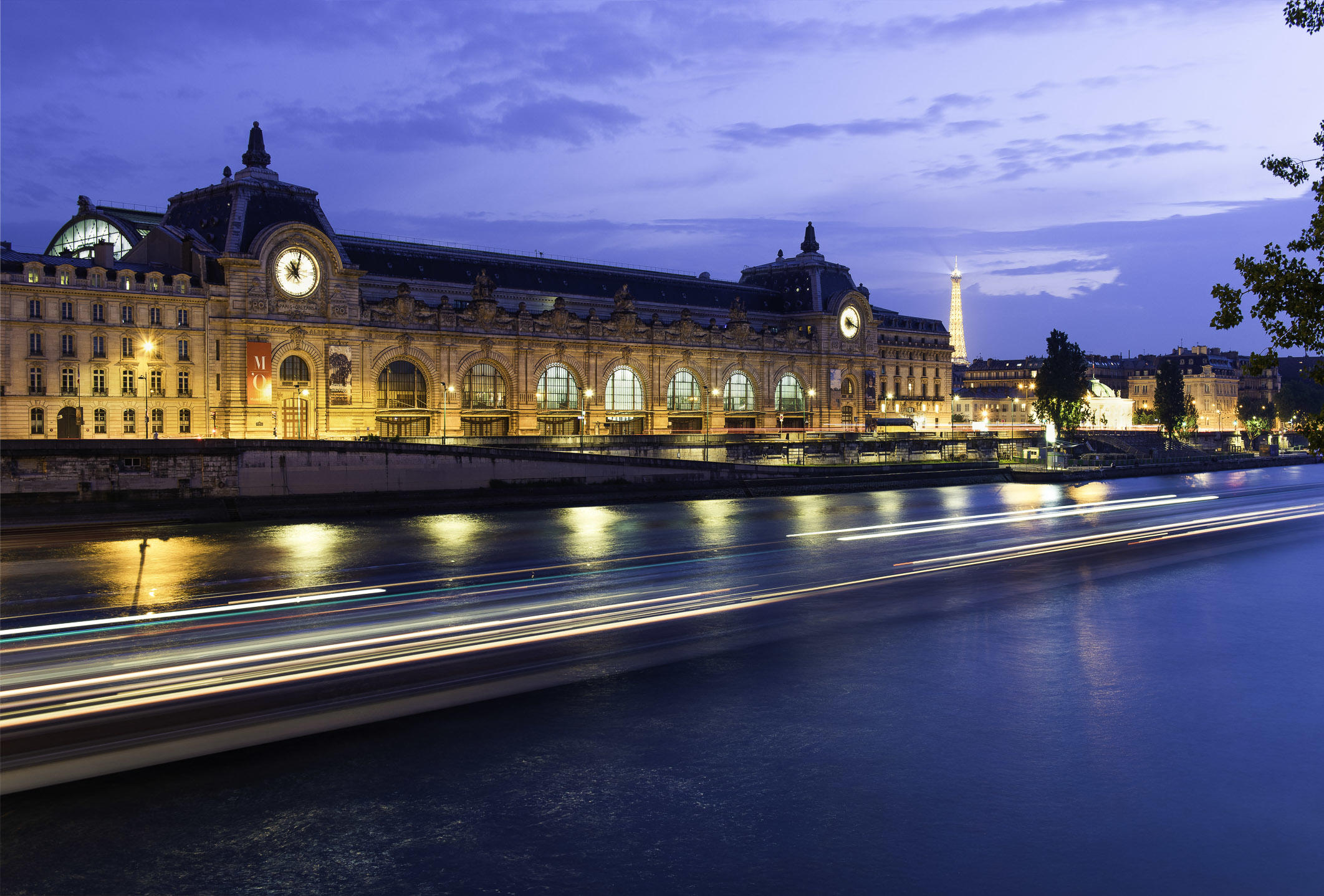
I really love this photo and think it looks great, but it has been heavily altered. I mentioned as much in the original blog post, but I really want to pull back the curtain and show what that means. Let’s look at a mostly untouched original version of this photo:
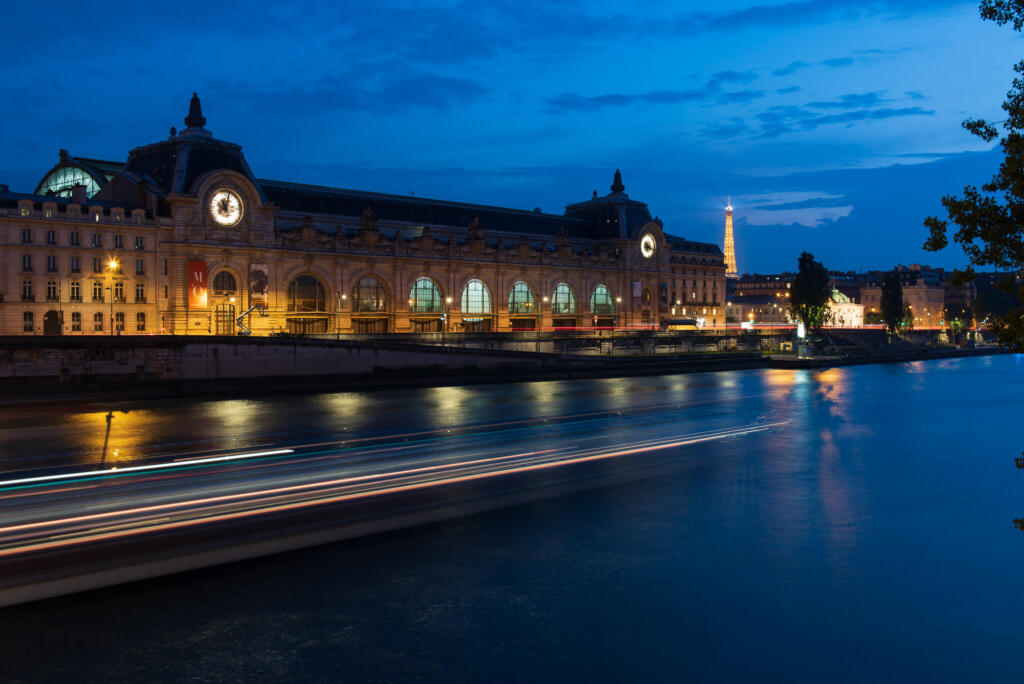
Clearly I changed a lot of stuff! Some of the changes were just light and color, like selectively brightening the building, changing the color of the sky, and making the photo really pop. But there are two more fundamental changes that stand out:
- When I took this photo, I chose to capture it when one of the Seine’s river boats passed by. I did a long exposure to capture the boat as streaks of light in the river, but the camera finished taking the exposure before the boat crossed the entire frame. I thought that looked bad, so I hand-duplicated some of the boat lights to extend the lines.
- There’s a scissor lift in front of the museum that really drove me nuts. It’s small, but I hated it in the photo and I desperately wanted to remove it. So I did.
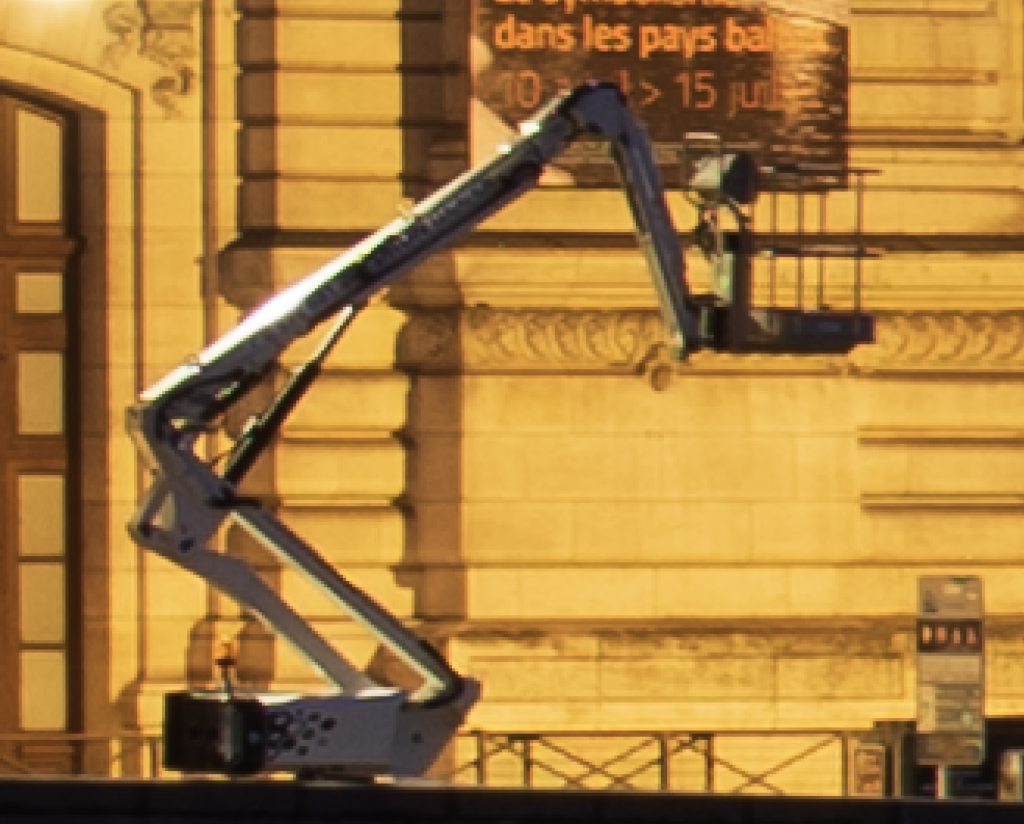
All of these changes made the image into something that differed from the scene at the time, but one could argue that happened even before I ever sat down in front of Photoshop. River boats on the Seine don’t look like invisible streaks of light. They look like boats. I chose to make them look like something bright and streaky when I took this as a long exposure instead of a short exposure. That same step had the effect of making the building look brighter and the Eiffel Tower look fully lit instead of capturing it in one of the partially lit phases of its evening light show.
“Accurate” was not the artistic sense I wanted to share. I wanted to create a sense of Paris at night: bright, electric, and alive – all the way down to snakes of lights passing across the Seine. (Note: I, the human writing this article, chose to put a dash in that last sentence with my own 10 fingers.)
I worked over the image, painstakingly, until it looked the way I wanted. Removing the scissor lift was particularly difficult, and I spent hours tinkering with Photoshop to remove it using pre-AI Content-Aware-Fill. It kept making everything worse, so I eventually gave up and resorted to making millions of little clone edits by hand – basically painting out the lift myself. That process sucked! As an experiment, I just tried doing this again, now 8 years later, and modern Photoshop made something 90% good enough in less than 5 minutes using whatever AI now powers their tools.
My photos were never “accurate.” They’re an art and they reflect what I want to share. But where’s the line? Why not just sit down and generate a billion photos of whatever I like? Why carry a camera at all? There’s a line somewhere, and I have struggled with this very question. Let me share another photo, one that I have not published yet, where I’m having this debate.
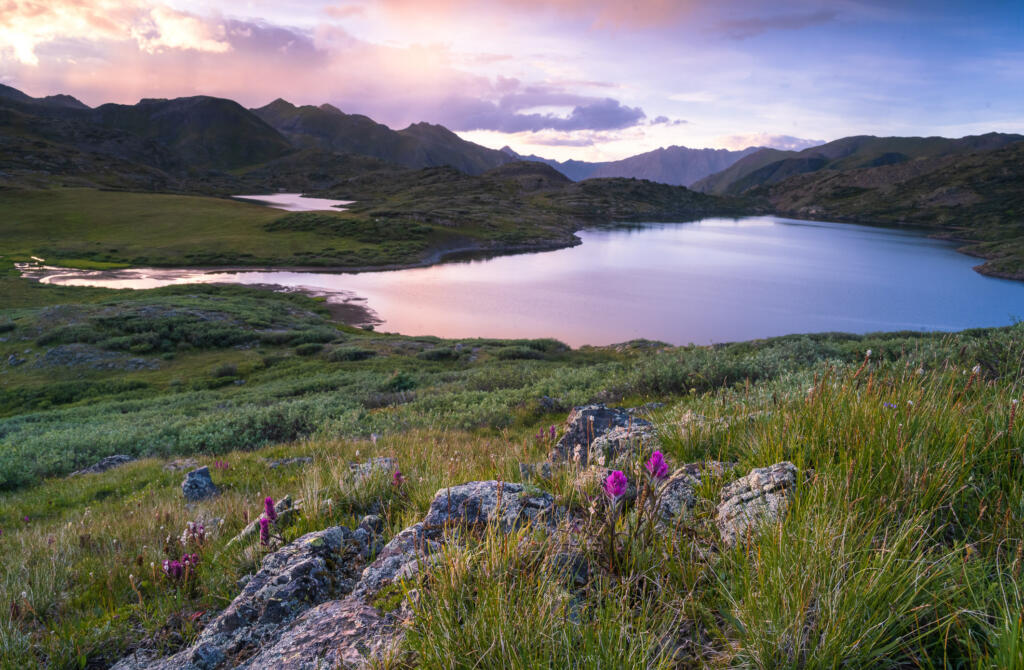
I took this photo while backpacking around the gorgeous Highland Mary Lakes near Silverton, Colorado. I have a lot of wonderful photos from this trip, but this one has been tripping me up for a while now. In the version above, I’ve applied some basic editing to capture the light of the sunset and the color of the moment. It was a gorgeous evening, but it wasn’t until I got back to my computer that I realized the framing is just too tight. I really should have shot this as a panorama to give myself more cropping options. It’s a fine photo, but that narrow frame bothers me, and all the clone stamping in the world won’t fix it. AI, however, can. I could just ask the AI to add some extra content around the edges, couldn’t I? So I did:
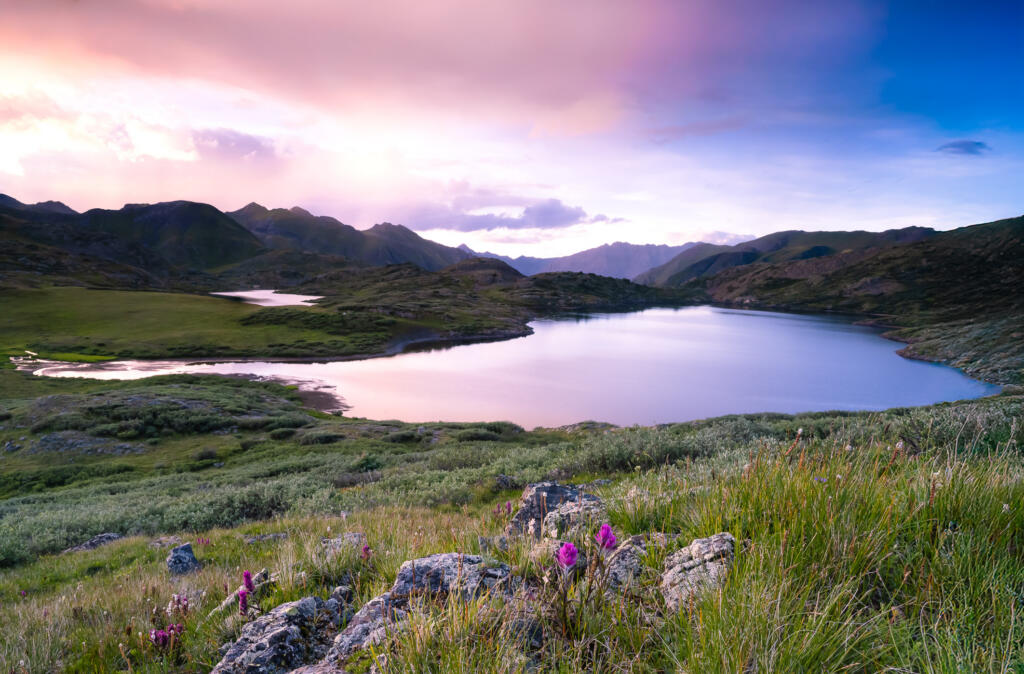
Now I like the framing, but what is this? Is it my photo? I think my answer is “yes.” I went to that location, I took the photo, and it captures the moment I wanted to capture. The only difference is the tooling, but each new generation of photo editing tools has always been uncomfortably transformative. Over the past couple of decades, digital image tools like image stitching, clone stamping, light and color modifications, etc. have gone from aberrant to mainstream. Now these tools include AI, which can help me do things faster or expand my vision of what a photo can be.
On the flip side, I still want to have a vision driven by seeing a scene and capturing something about it. It’s not enough to just completely make up a photo at home with a prompt. I’m conveying my impressions about a real moment that I captured while I was there. My need to physically capture a base image, rather than outright fabricate it, will ultimately limit how I use AI for traditional photography. AI expands and improves my photos, but my photos are still based on a real place and an actual moment.
Writing this post helped me clarify my thoughts, and I appreciate you reading this far. Hopefully my photos will continue to delight you, and I will continue to write with some honesty about what went into making the photos I share. I have been negligent in sharing for a while, but I’m hopeful I can start posting again.

Great workflow, Tim! I especially like how you use a brand style file to keep visuals consistent and prioritize accessibility with meaningful alt text. That combination of AI efficiency and human editing is what makes content genuinely useful.
Really thoughtful perspective, Stanton! Your Highland Mary Lakes example highlights an important distinction between AI enhancing a photographer’s vision and generating an entirely fictional scene. I think creative intent and transparency matter more than the editing tools themselves.